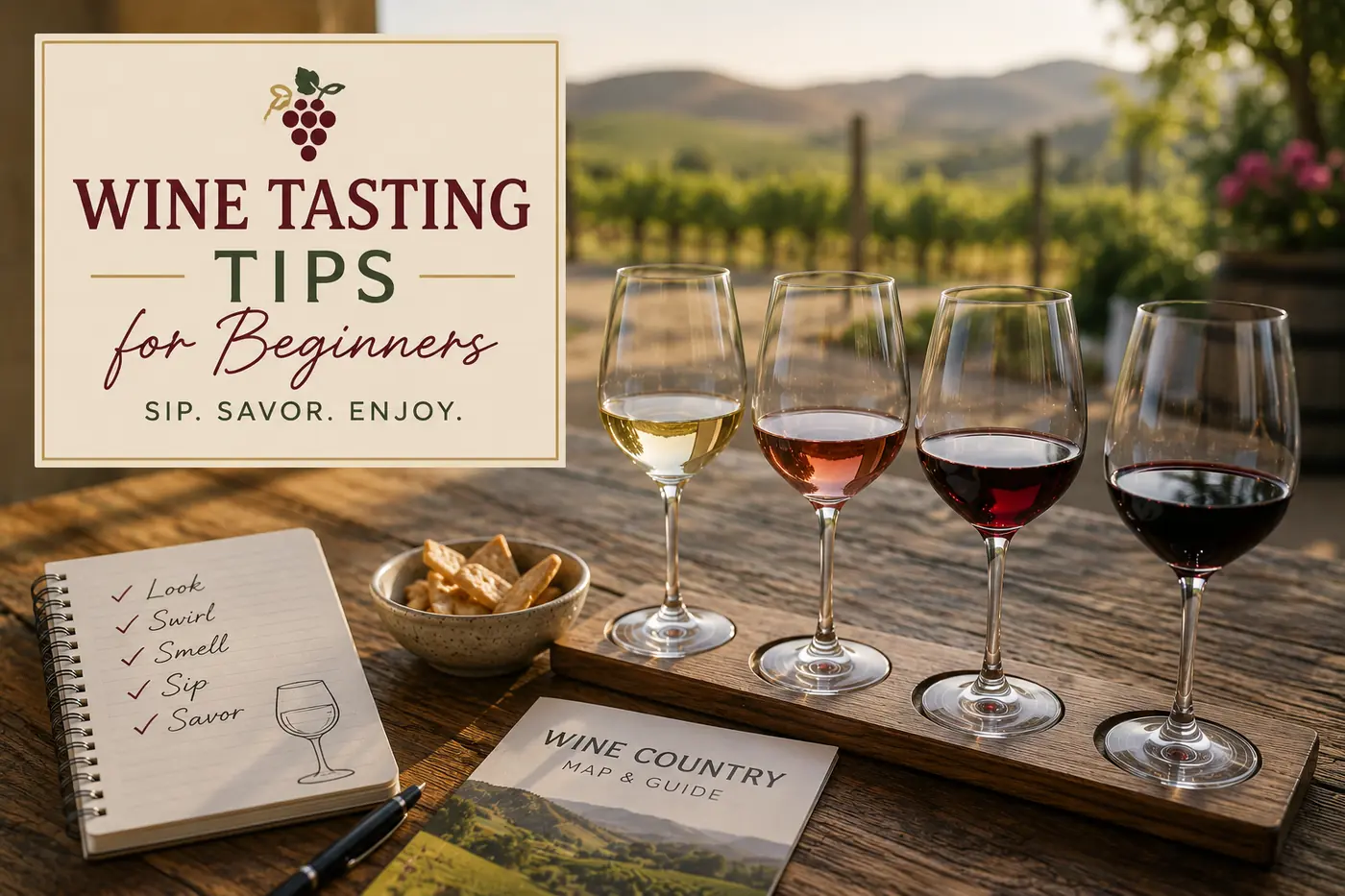
The wine industry has done a terrible job of making wine tasting feel approachable. The vocabulary is arcane, the etiquette is unstated, and the pricing at premium estates can feel like a test of how much money you have. None of this should stop you from visiting a winery. Here are 12 things that will make your first (or fifth) tasting room visit substantially better.
Before You Go
1. Eat a Real Breakfast
Wine tasting on an empty stomach is unpleasant, potentially unsafe, and terrible for your ability to evaluate what you're drinking. The tannins in red wine are particularly harsh on an empty stomach. A proper breakfast, not just coffee, makes a measurable difference in how much you enjoy and remember the morning's wines.
2. Book in Advance
Most California wineries now require reservations, particularly on weekends. Walk-ins are still possible at many smaller estates on weekdays, but any winery you specifically want to visit should be booked 1-2 weeks in advance. A no-show or late cancellation at many estates results in a charge for the full tasting fee, read the policy before booking.
3. Limit Yourself to Three Wineries Per Day
This is the most important logistical decision you'll make. Three thoughtfully chosen wineries, each with an hour or more of your time, is a full, rich, satisfying wine day. Four starts to become a blur. Five is genuinely diminishing returns on the last two visits, and potentially unsafe for the drive home.
At the Tasting Room
4. Skip the Perfume
This is the most reliably ignored piece of wine tasting advice and also the most consequential. Strong fragrance, perfume, cologne, heavily scented lotion, makes it impossible to evaluate wine aromatically, both for you and for the people around you. A winery tasting room is a small, enclosed space. Leave the fragrance at home for wine tasting days.
5. Look Before You Smell, Smell Before You Sip
The classic tasting sequence exists because it works. Look at the wine's color and clarity (though this matters less than people think). Smell it first without swirling, then with swirling, you'll often notice different things. Then take a small sip and let it coat your whole mouth before swallowing (or spitting). This sequence rewards patience.
6. Use the Spit Bucket
Every serious tasting room has a spit bucket (often called a "dump bucket" or simply "the bucket"), and it's there for exactly this purpose. Professional tasters always spit. If you're visiting three or more wineries, you should too, both for your judgment's clarity and for your ability to drive safely. It is completely normal, expected, and unremarkable to use the spit bucket at every winery. No one will think less of you. Everyone who knows anything will think better of you.
7. Ask Specific Questions
Generic questions ("what do you recommend?") produce generic answers. Specific questions produce interesting conversations. Try: "Which wine in this flight is most food-versatile?" or "What makes this vintage different from last year?" or "Do you have any library wines or single-vineyard expressions not on the regular menu?" The best tasting room experiences come from genuine dialogue with the person pouring, who is usually the most knowledgeable wine person you'll talk to all day.
8. Take Notes (Even Simple Ones)
You do not need a wine journal or formal tasting vocabulary. A simple note on your phone, "Winery Name: wine 1, loved this, cherry and spice; wine 3, too tannic", is enough. By the end of a three-winery day, the wines will blur together in memory. Notes, however brief, let you order the right bottle later and remember which estates to revisit.
The Purchasing Decision
9. Don't Buy at the First Winery
This is the hardest piece of advice to follow. The first tasting of the day is always the most vivid, your palate is fresh, you're excited, the winemaker is enthusiastic. Resist the urge to buy everything. Taste first, buy at the end of the day when you've developed a clear sense of which wines genuinely moved you. The first winery's wine will be available when you return to purchase; if it sells out, it probably wasn't the right wine for you.
10. Understand What Tasting Fee Waiver Means
When a winery says "tasting fee waived with purchase," it means the fee is deducted from the cost of your wine purchase, usually if you buy one or two bottles. This is a good deal if you were going to buy the wine anyway. It's a bad deal if you're buying wine you don't particularly want just to avoid the fee. At $20-$50 per person for a tasting, you're paying for a genuine experience, not for access to free wine. Pay the fee and buy only wine you love.
11. Ship Wine Home If You Can
Most California wineries ship directly to most U.S. states. If you're flying or have limited car space, ask about shipping options before you buy. The per-bottle shipping cost on a mixed case is often $3-$7 per bottle, less than checked baggage fees and much safer for your wine's condition.
After the Visit
12. Write Down What You'd Order Again
The greatest tragedy of a successful wine tasting day is remembering you loved a wine and forgetting which one it was. Before bed on your last tasting day, review your notes and star the wines you'd actually order again. Take a photo of the label if you can. These wines become the foundation of your future cellar, and the basis for intelligent questions at your next tasting.
Wino Notion profiles more than 1,900 California wineries with information on tasting fees, reservation requirements, walk-in availability, and visitor amenities. Search for your next visit.