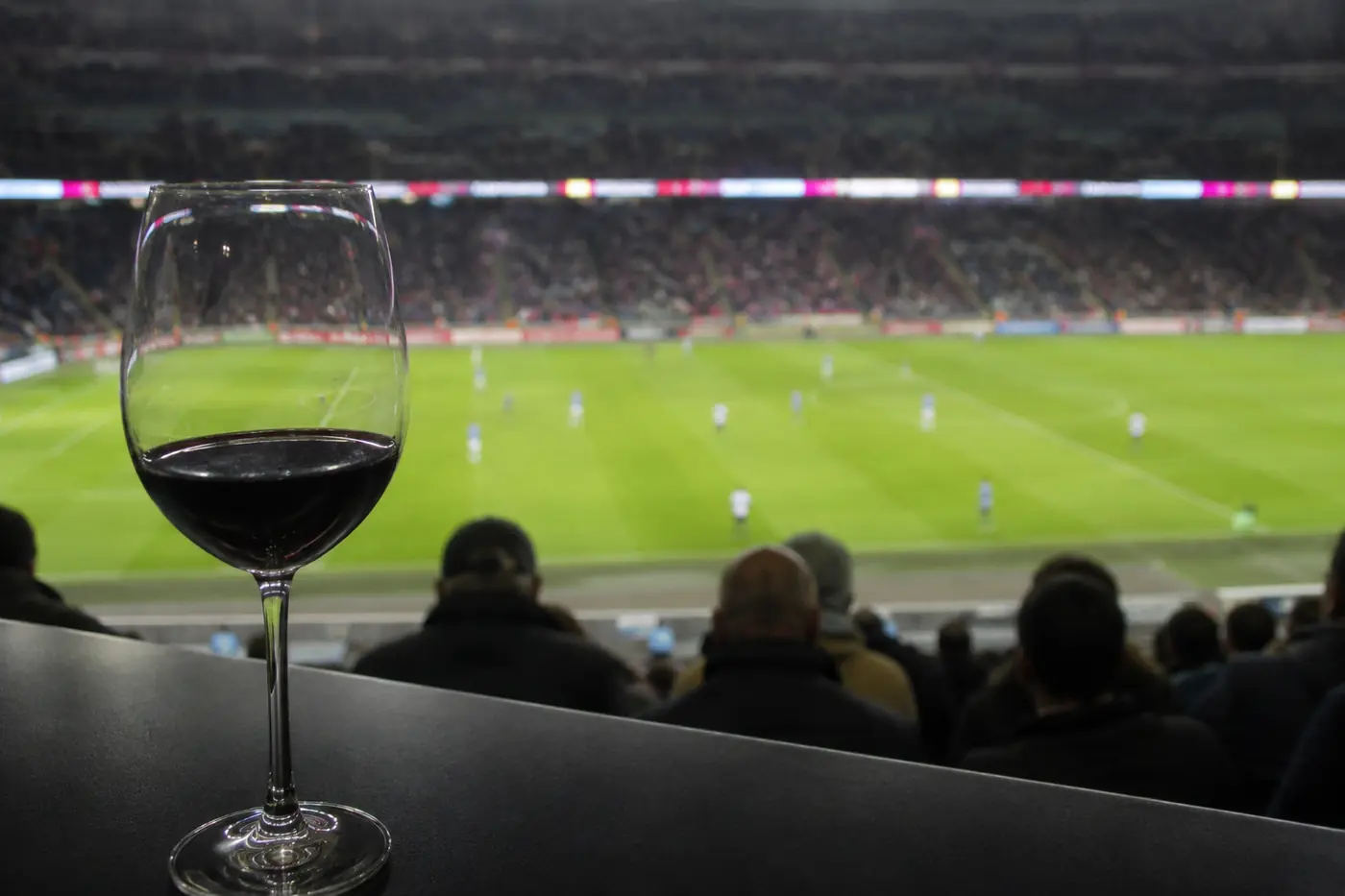
The 2026 World Cup is the first to be hosted across three countries at once, the United States, Canada, and Mexico,which turns a month of football into the largest hospitality stage the sport has ever had. Wherever there are VIP suites, viewing parties, and celebrations, there is wine, and a growing number of producers are treating the tournament as a rare chance to be seen by a global audience all at once.
What makes wine's role interesting is that, unlike the beer and spirits giants who buy official FIFA sponsorships, most wine brands are fighting for attention without a rights deal. Their visibility is opportunistic, earned through hospitality placements, cultural moments, and the simple fact that a glass of wine still signals the good life.
The moment that went viral
One of the tournament's unlikeliest talking points had nothing to do with a goal. During Scotland's match against Brazil, David Beckham was photographed in the stands holding an enormous, almost comically oversized wine glass, quickly nicknamed "fishbowl-sized" online,and the image spread across social media within hours. It was a reminder that wine's presence at these events doesn't always come from a marketing department; sometimes the category gets its biggest exposure by accident.
Seated nearby was Joe Tsai, the Alibaba co-founder who has become a familiar face at elite sporting events and who bought vineyard parcels in Burgundy's Gevrey-Chambertin in 2024. The pairing. A tech billionaire turned fine-wine owner watching world-class football.captures the overlap the tournament keeps surfacing: elite sport, luxury consumption, and serious wine increasingly move in the same circles.
One brand playing the official game
The clearest example of a winery activating deliberately is Marqués de Murrieta. The Spanish Rioja house has confirmed that its wines are being poured in the VIP hospitality areas at Mexico City's Azteca Stadium, making it one of the few wine brands publicly tied to the tournament's official hospitality programme.
It's a fitting choice. Founded in 1852, Marqués de Murrieta is widely regarded as a pioneer of modern Rioja and exports to more than 100 countries. The wine featured in the programme is its newly released 2022 vintage from the Ygay Estate, a Tempranillo-based blend rounded out with Graciano, Mazuelo, and Garnacha. The World Cup also fits a long pattern for the brand, which has tied itself to ATP and WTA tennis, Formula One, and the UEFA European Championship over the years.
Why it matters beyond the stadium
For the kind of small and mid-size wineries we cover at Wino Notion, a stadium hospitality deal is out of reach, and that's the point worth taking away. The lesson from the World Cup isn't that you need FIFA's stage; it's that wine earns its place in big cultural moments through hospitality, food, and celebration, all of which scale down.
The accessible version of the same idea is local: a watch-party tasting flight, a pairing menu built around a marquee match, a by-the-glass presence at the bar where fans actually gather. Visibility at the World Cup is a billion-dollar version of something every winery already understands; that wine sells best when it's part of the occasion, not separate from it.
This write-up draws on reporting by Vino Joy News. For the full story, including more on the brands and strategies in play, read the original article: Wine at the World Cup: How Brands Are Fighting for Visibility.