Here is a number that should unsettle every winery owner in America: among U.S. adults under 35, wine's share of total alcohol spending has dropped for five consecutive years. Not because younger people are drinking less, they're drinking differently. Hard seltzers, ready-to-drink cocktails, craft spirits, cannabis beverages, and non-alcoholic options have fractured the beverage landscape in ways that wine's traditional marketing playbook was never designed to handle.
Veteran wine consultant Nick Karavidas, who has spent four decades in the business, recently described the current market as the most challenging economic environment he has ever seen. But his diagnosis goes beyond the cyclical. The structural problem, Karavidas argues, is that wine has stopped earning new consumers and started assuming they would show up on their own.
They're not showing up.
The assumption that broke
For generations, the wine industry operated on a comforting assumption: people would naturally migrate to wine as they got older. You started with beer in college, graduated to cocktails, and eventually discovered wine in your thirties. The category didn't need to recruit, it just needed to wait.
That assumption worked when wine's only real competitors were beer and spirits. It breaks when a 28-year-old walks into a bottle shop and sees hard seltzer, canned cocktails, THC-infused sparkling water, natural wine in a can, a $14 craft beer four-pack, and a shelf of non-alcoholic spirits alongside the Cabernet. Wine isn't competing with other wine. It's competing with everything.
The numbers confirm what any bartender already knows. Total U.S. wine consumption has declined in each of the last three years. The decline is sharpest among adults under 40, precisely the demographic that was supposed to be aging into wine right now. Meanwhile, the spirits category has grown for thirteen consecutive years, and the ready-to-drink segment has more than tripled since 2019.
What younger consumers actually want
This is where the conversation usually goes wrong. When the wine industry talks about "reaching younger consumers," the instinct is to make wine simpler: sweeter wines, colorful labels, lower prices, Instagram-friendly packaging. And while some of that has worked tactically, canned rosé, orange wine, natural wine, the deeper pattern is more interesting than "make it cute."
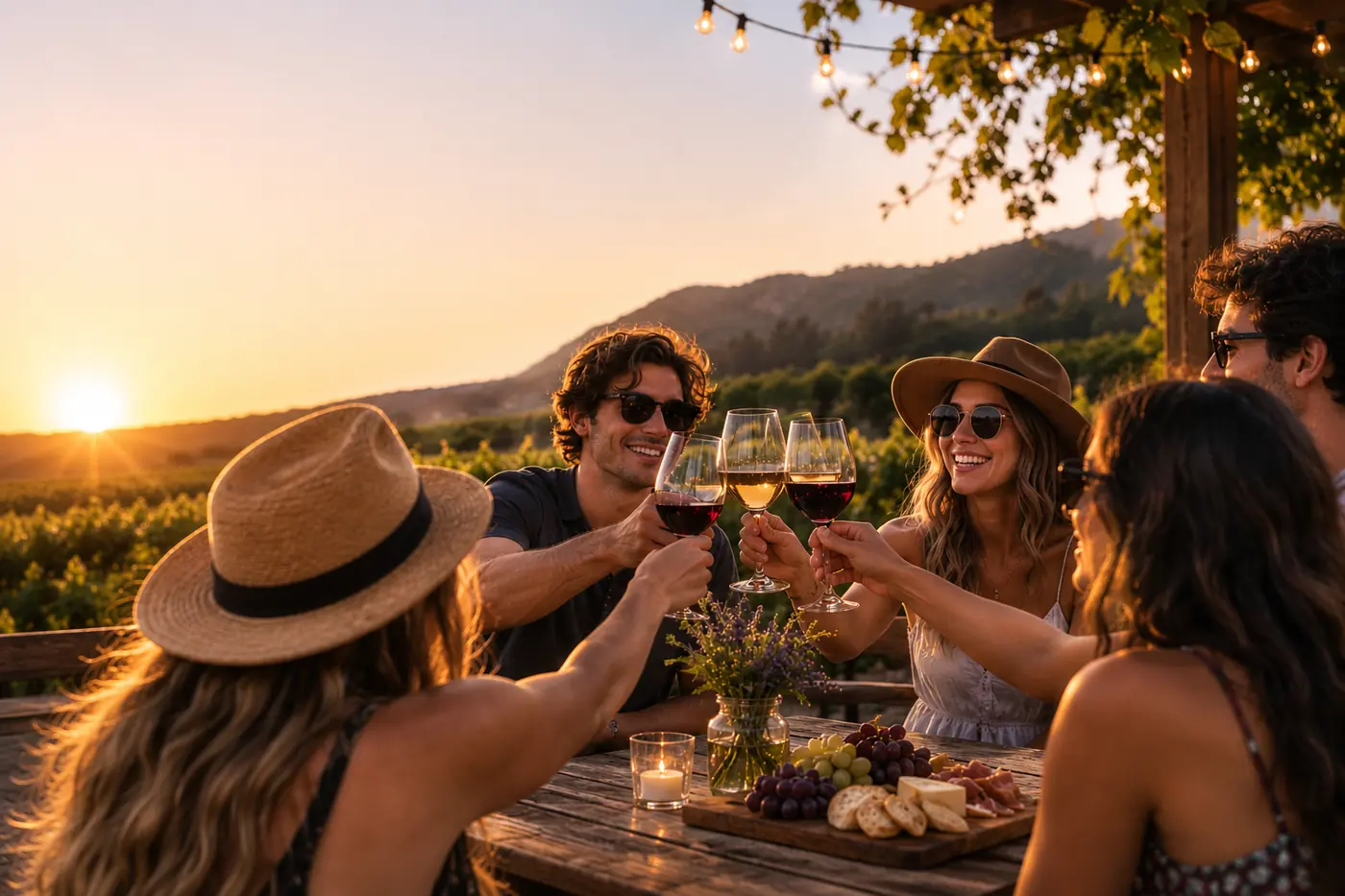
What younger consumers are actually looking for is experience over information. They don't want to be told that a wine, fermented in French oak for 18 months, and comes from the Stags Leap District. They want to sit in a vineyard with a dog at their feet and a glass of something the winemaker just handed them, and they want to post a photo of that moment, not of the bottle.
This is not a dumbing-down. It's a reordering of priorities. The technical details still matter, they just come second, after the experience creates the emotional connection. A winery that leads with "estate Cabernet Franc, Monticello AVA, 14.2% ABV" is speaking a language that most potential new wine drinkers don't speak yet. A winery that leads with "come sit on our porch and taste something you've never tried before" is speaking the language of everyone.
The discovery bottleneck
There's an infrastructure problem underneath the marketing problem, and it's the one we think about most at Wino Notion.
The United States now has over 11,000 bonded wineries. We track more than 5,000 of them. And from the consumer's perspective, finding the right one to visit, the one that matches your taste, your budget, your vibe, the region you're traveling through, is absurdly difficult. Most winery websites look the same. Most tasting room descriptions read the same. Most "best wineries" listicles were written by someone who visited six places and declared them definitive.
Younger consumers are not going to power through that friction. They're going to open their phone, see a confusing wall of options, and go to a brewery instead, because the brewery has better reviews, clearer photos, and a website that tells them exactly what to expect in 30 seconds.
That's the discovery bottleneck, and it's real. It's why Wino Notion exists: to make every winery in America findable, comparable, and understandable in the language that people actually use, not in the language of wine professionals talking to each other.
What's actually working
The good news is that some wineries have already figured this out, and they're thriving while the rest of the industry contracts.
In Ramona Valley, 45 boutique family wineries have built a wine scene that is inherently experience-first: you walk into a tasting room, meet the owner, pet the dog, taste wine made from grapes growing in the field behind you, and leave with a story, not just a bottle. Ramona's average tasting fee is $12-$25, accessible to anyone, and the culture is walk-in, not reservation-only. These are wineries that a younger consumer can discover and immediately understand.
In Oregon's Rogue Valley, winemaker Jean-Michel Jussiaume left France's Loire Valley and settled in Southern Oregon because he saw something the established regions didn't offer: freedom to pioneer. His Maison Jussiaume sparkling wines, made by traditional Champenoise method from old-vine Chardonnay at Del Rio Vineyards, have earned 90+ point scores and Best in Show awards. The wine is world-class. But what makes it discoverable is the story: a French winemaker who felt like a pioneer in Oregon and built something new. That story travels. A score doesn't.
Across the country, the wineries that are growing share common traits: they tell stories instead of reciting specs, they welcome newcomers instead of gatekeeping, they invest in digital presence instead of assuming word-of-mouth will do the work, and they treat the tasting room as a hospitality experience, not a transaction.
What the industry needs to do
Karavidas argues, and we agree, that the recovery will take two to three years and will require fundamental changes in how wineries think about their market. The wineries that survive and thrive will be the ones that accept three uncomfortable truths:
First, wine is no longer a default. It's a choice in a crowded marketplace, and it needs to earn attention the same way every other beverage category does, through compelling experiences, authentic storytelling, and genuine hospitality.
Second, digital is not optional. A winery without a clear, mobile-optimized website, an active presence on the platforms where younger consumers spend their time, and a direct-to-consumer shipping infrastructure is a winery that has voluntarily made itself invisible to the next generation of buyers.
Third, discovery platforms matter. When every winery looks the same from the outside, the platforms that help consumers tell them apart become essential infrastructure. This is not a pitch, it's an observation about how every other hospitality industry (hotels, restaurants, travel) has already solved the same problem. Wine is late, but it's not too late.
The long view
Karavidas makes a point worth sitting with. He compares the wine industry to Portugal's cork oak business, where a tree planted today may not produce usable cork for more than 30 years. The families who planted those trees weren't thinking about next quarter. They were thinking about the next generation.
Wine should think the same way. The consumers who will sustain the industry in 2040 are in their twenties right now, and most of them have not yet had the experience that turns a casual drinker into a wine lover. That experience, the porch, the sunset, the glass of something surprising, the winemaker's story, is waiting for them at thousands of wineries across this country. The only thing missing is the bridge between "I might like wine" and "I know exactly where to go."
Building that bridge is what we're here for.