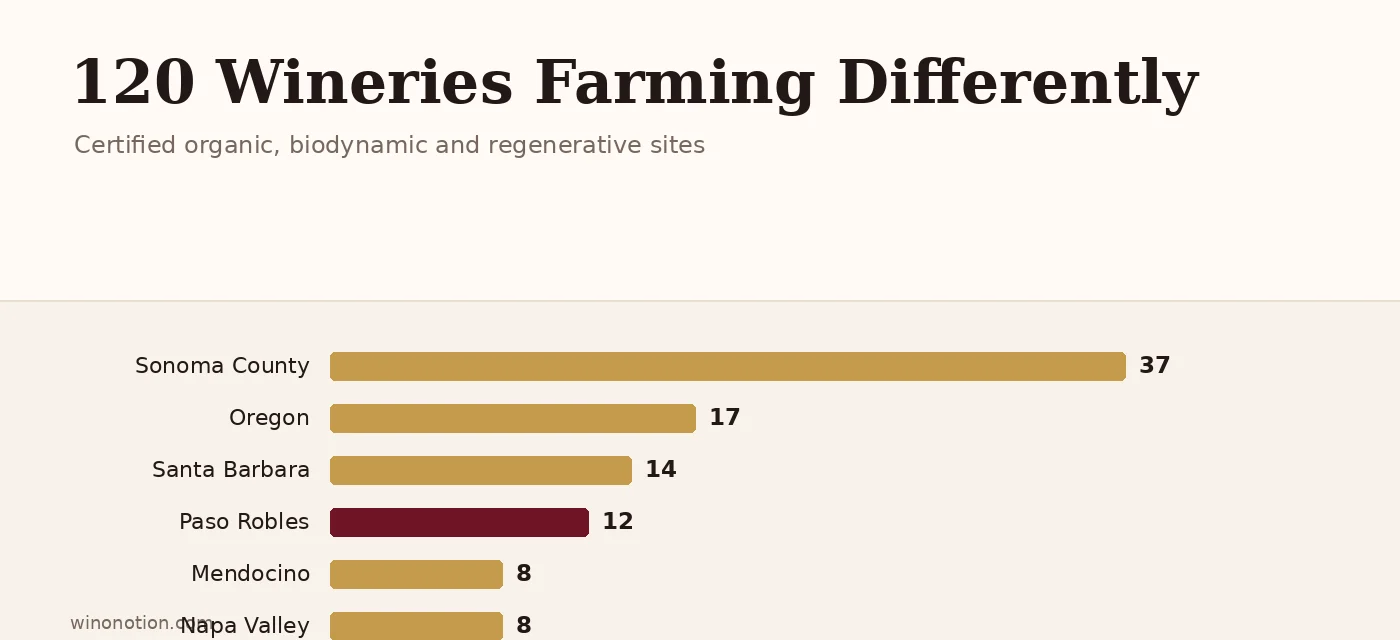
The Farming Turn: 120 Wineries Changing How the Ground Is Worked
Organic and biodynamic farming has moved from fringe conviction to competitive advantage, and one small California region now holds the highest concentration of regenerative certification in the world.
Paso Robles quietly leads the world
Six wineries in Paso Robles hold Regenerative Organic Certification, out of roughly twenty-two worldwide. That is the densest cluster anywhere. Tablas Creek was the first ROC vineyard in the United States in 2020 and farms with sheep and alpacas grazing the rows. Booker releases lacewing eggs by drone as pest control. Halter Ranch, MAHA, Robert Hall and Le Cuvier complete the group.
What the labels actually mean
Certified organic governs what may be applied to the vineyard: no synthetic pesticides, herbicides or fertilisers. Biodynamic adds a whole-farm philosophy with composting preparations and a calendar, and requires the same organic baseline. Regenerative Organic Certified is the newest and strictest, adding soil health, animal welfare and farmworker fairness to the organic requirement.
None of the three is a promise about flavour. What they tell a visitor is how the land is treated, which for many people is reason enough to choose one tasting room over another.
Where else to look
Sonoma County holds the largest number of certified sites in our catalog, with Oregon and Santa Barbara close behind. Mendocino has farmed organically longer than most regions have discussed it, and several of its estates were certified decades before the term became a marketing asset.
Read more in the tasting fee report or browse regions in the winery finder.
A note on the numbers
These are wineries whose pages reference biodynamic practice, certified organic farming or ROC from sources we verified. Certification status changes and lapses; confirm current status with the winery if it is the reason you are visiting.
Published September 2026.