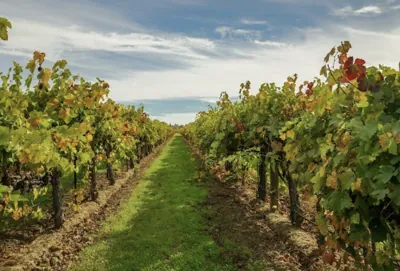
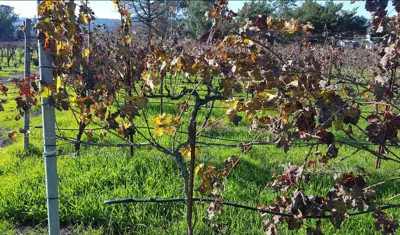
The Willamette Valley is the reason people take Oregon wine seriously. A broad valley stretching 150 miles from Portland south to Eugene, it's Oregon's most important agricultural region and the home of some of the world's most compelling Pinot Noir outside Burgundy.
The valley's cool maritime climate, with wet winters, warm dry summers, and dramatic harvest-season rain that demands careful timing, mirrors Burgundy closely enough that several of France's most prestigious domaines have established outposts here. Domaine Drouhin Oregon, in the Dundee Hills, was the first in 1988, followed by Maison Louis Jadot's Resonance and others.
Eleven distinct AVAs within the Willamette Valley capture meaningfully different terroirs. The Dundee Hills, with their volcanic Jory soil and ideal northeast-facing slopes, produce the most structured and age-worthy Pinot Noir. The Yamhill-Carlton AVA brings marine sedimentary soils and a warmer microclimate. The McMinnville AVA, with basalt-based soils and the highest elevations in the valley, produces wines of unusual depth and complexity.
Willamette Valley
Est. 1983
The overarching AVA, stretching about 150 miles from Portland south to Eugene between the Coast Range and the Cascades. Oregon's oldest appellation and home to two-thirds of the state's wineries, it is one of the world's benchmark regions for Pinot Noir.
Est. 2005
Red, iron-rich Jory volcanic soils on gentle northeast-facing slopes. Where Oregon wine began, and still the most densely planted district, known for perfumed, structured, ageworthy Pinot Noir.
Est. 2005
A small, uniform ridge of fine marine-sedimentary soil tucked inside the Chehalem Mountains. Warm and well-drained, it yields concentrated, firmly structured Pinot.
Est. 2005
A horseshoe of hills around Carlton and Yamhill on ancient marine sediments, sheltered by the Coast Range and Chehalem Mountains. Warmer sites give deep, savory, darker-fruited wines.
Est. 2006
The largest and most diverse sub-AVA, a single uplifted landmass southwest of Portland spanning volcanic, sedimentary, and loess soils and the valley's highest elevations.
Laurelwood District
Est. 2020
Nested within the Chehalem Mountains and defined by wind-blown Laurelwood soil, loess layered over ancient basalt. Pinot here is vibrant and red-fruited with baking-spice notes.
Est. 2006
Basalt and marine soils cooled by afternoon winds funneling through the Van Duzer Corridor. The wind stresses the vines, producing mineral, high-tension, structured Pinot.
Est. 2005
West of McMinnville town on uplifted marine sediment and basalt over marine bedrock, in the rain shadow of the Coast Range. Cool and structured, with savory, ageworthy wines.
Est. 2019
Named for the break in the Coast Range that channels cool ocean air into the valley. The steady wind thickens grape skins, giving deeply colored, high-acid wines with firm structure.
Est. 2020
The far-north district near Forest Grove, home to Oregon's first commercial vineyard. Predominantly Laurelwood loess soils and a sheltered setting favor aromatic, early-ripening wines.
Lower Long Tom
Est. 2021
In the southern valley between Corvallis and Eugene, on marine-sedimentary Bellpine soils shielded by the Coast Range. Wines lean richer, with ripe blue and black fruit.
Mount Pisgah, Polk County
Est. 2022
One of the valley's smallest AVAs, a compact rise near the Willamette River whose warmth and uniform marine-sedimentary soils produce concentrated, structured Pinot.