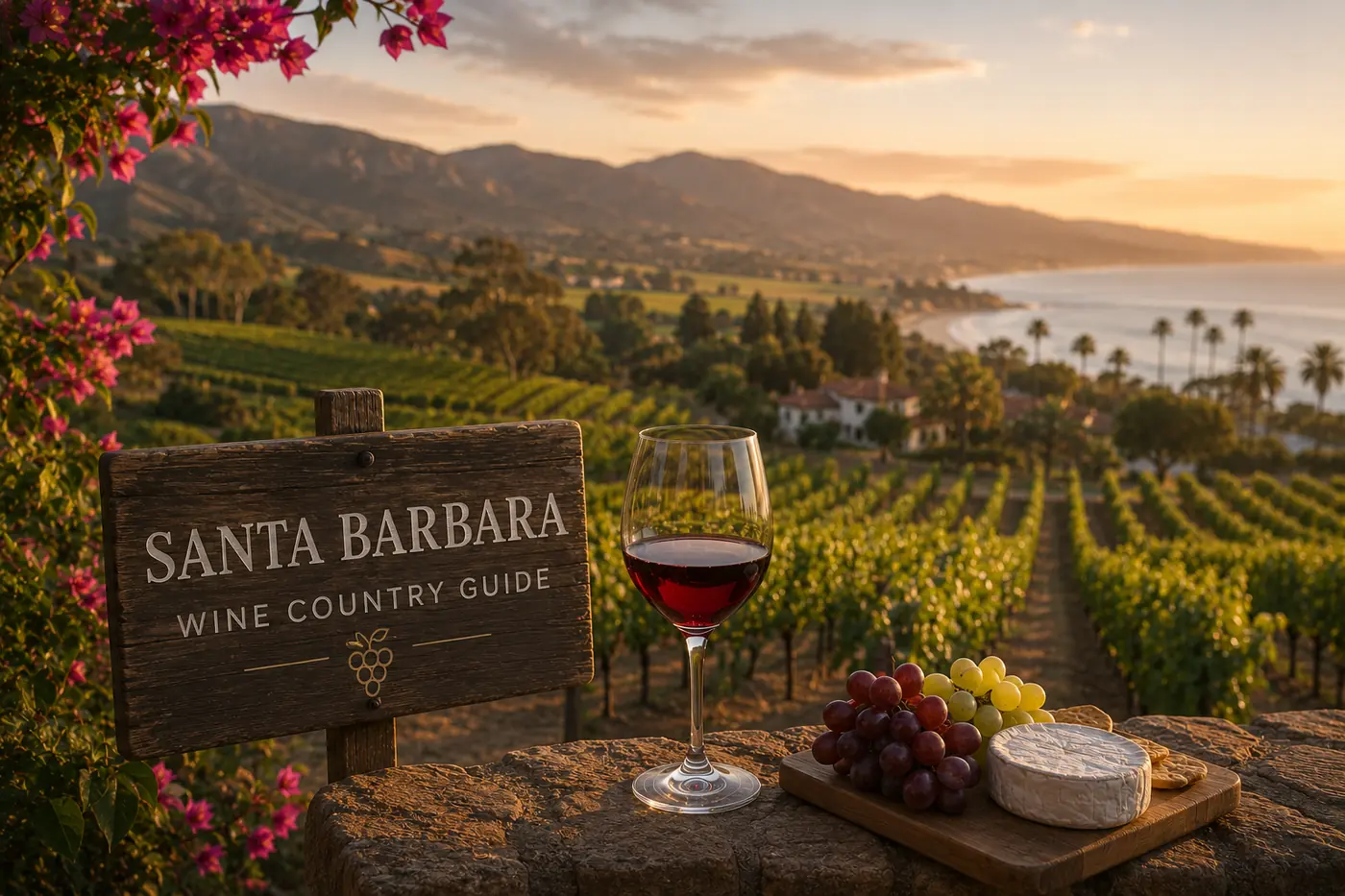
When Sideways was filmed in Santa Barbara wine country in 2004, the region was already producing extraordinary wine. The film made it famous. Two decades later, the hype has settled into something more durable: a genuine reputation for Pinot Noir and Syrah that can compete with anywhere in California, plus a visitor experience that remains substantially less crowded and less expensive than Napa or Sonoma.
Here's what makes Santa Barbara wine country distinctive, and how to visit it intelligently.
The Geographic Secret: East-West Mountains
California's mountain ranges run mostly north-south, blocking Pacific marine air from flowing inland. Santa Barbara County is a geological exception: its mountain ranges run east-west, meaning the Santa Ynez and Santa Rita Hills valleys are open to the Pacific at their western ends. Cool ocean air and morning fog flow through these valleys continuously, creating growing conditions cool enough for world-class Pinot Noir at the same latitude as Los Angeles.
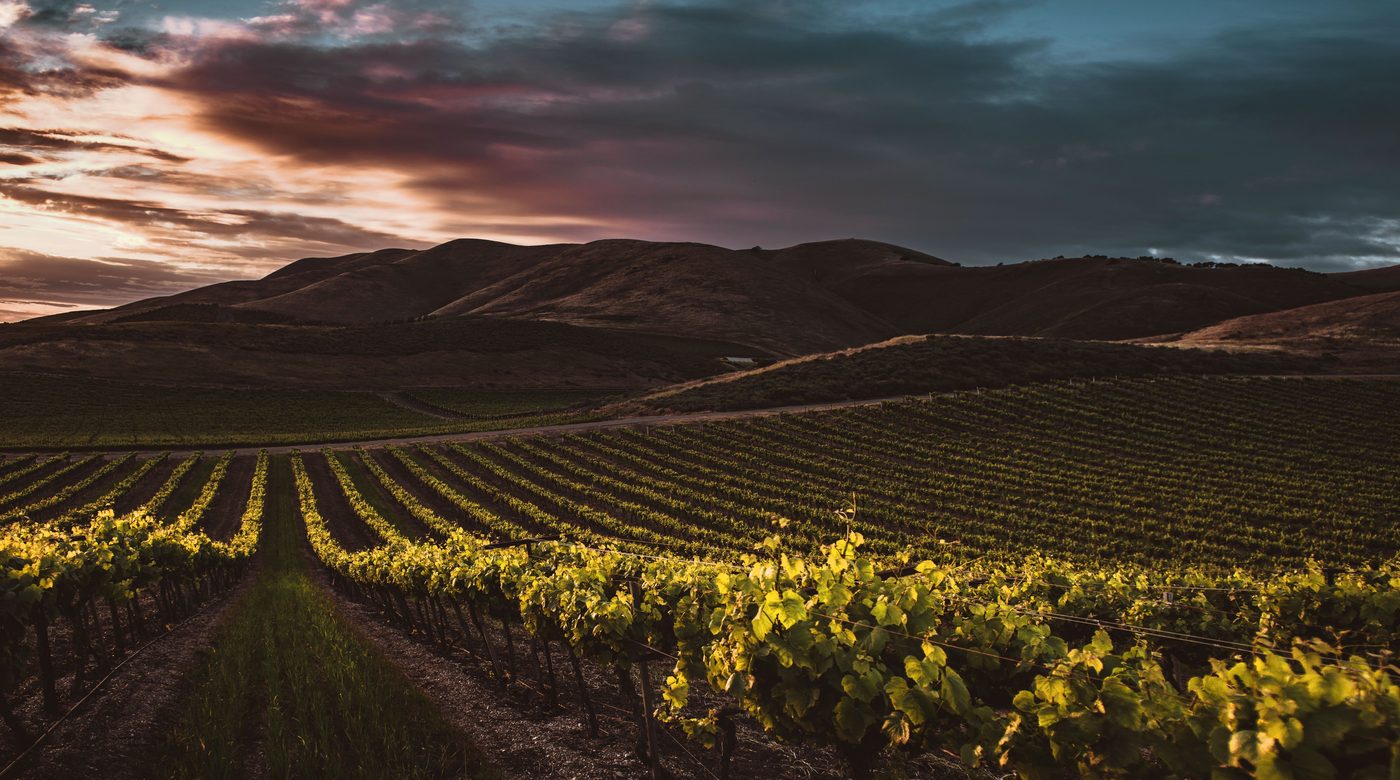
Sta. Rita Hills, California's Most Exciting Pinot Noir Appellation
The Sta. Rita Hills (the official AVA spelling, to avoid confusion with a Chilean wine producer) occupies the western end of the Santa Ynez Valley where Pacific marine influence is most direct and temperatures are coldest. The distinctive diatomaceous earth soils, fossilized sea creatures compressed into a chalky, mineral-rich layer, give Sta. Rita Hills Pinot Noir a saline, stony quality unlike any other California Pinot region.
The harvest can extend into late November. Yields are tiny. The wines are often tight and unapproachable young, opening up into something profound with 5-10 years of cellaring. These are serious wines for serious drinkers.
Ballard Canyon, The Syrah Capital of California
Ballard Canyon AVA, a small sub-appellation within the Santa Ynez Valley, has emerged as California's most concentrated zone of world-class Syrah production. The calcareous soils, significant diurnal temperature variation, and particular orientation of the canyon create conditions that favor Syrah's most elegant and complex expressions.
Los Olivos and the Santa Ynez Valley Tasting Room Row
For the most visitor-accessible Santa Barbara wine experience, Los Olivos is the epicenter. The small town on Foxen Canyon Road has a dozen tasting rooms within easy walking distance of each other, several excellent restaurants, and the relaxed, unhurried atmosphere that makes Santa Barbara wine country so appealing to visitors who find Napa overwhelming.
Happy Canyon, California's Smallest Dedicated Bordeaux AVA
At the eastern, warmer end of the Santa Ynez Valley sits Happy Canyon, a small AVA where Sauvignon Blanc and Cabernet Sauvignon thrive in conditions that are too warm for Pinot Noir but ideal for Bordeaux varieties. The contrast between Happy Canyon's warmth and Sta. Rita Hills' cool extremity illustrates the extraordinary diversity of the Santa Barbara wine country in a single valley system.
Visiting Santa Barbara Wine Country
Getting there: Santa Barbara wine country is 45 minutes north of Santa Barbara city via US-101 (take the Highway 154 exit toward Solvang and Los Olivos) or 2.5 hours north of Los Angeles. San Luis Obispo Airport (SBP) is 45 minutes north and serves several major airlines.
Base camp: Solvang (Danish-themed, central, excellent hotels) or Los Olivos (smaller, more boutique, walkable tasting rooms) are the best bases for wine touring. Santa Barbara city is too far south for comfortable day trips to the Sta. Rita Hills.
Tasting fees: Average $15-$30 per person, with many estates waiving fees with a single bottle purchase. Significantly more affordable than Napa or Sonoma.
Season: Spring (March-May) for green hills and uncrowded tasting rooms. Summer is warm and busy. Fall harvest (September-November, with Sta. Rita Hills extending later) for the most exciting atmosphere.
Wino Notion has profiles on over 60 Santa Barbara County wineries across all sub-appellations. Search by AVA, variety, and visitor amenities to plan your itinerary.